


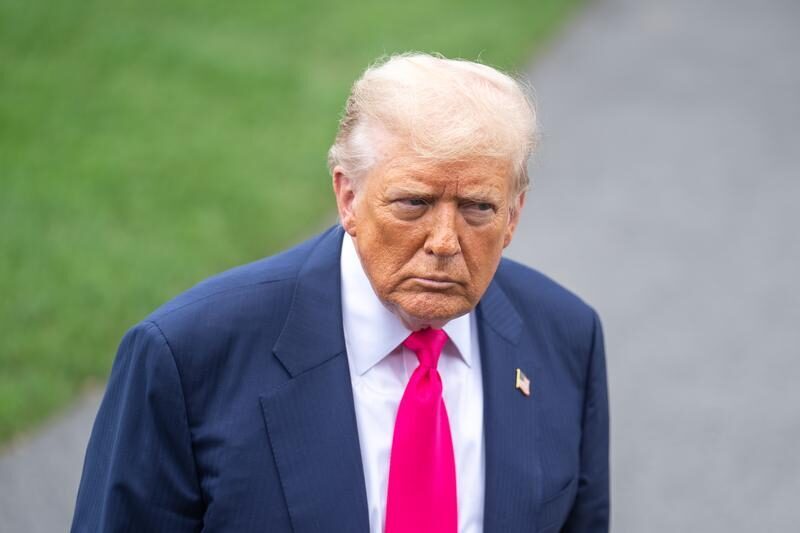
United States President Donald Trump has announced that the comprehensive peace agreement with Iran has reached its final drafting phase, with an official signing ceremony expected within days. Speaking at the White House, Trump confirmed that the landmark treaty guarantees Iran will never acquire nuclear weapons in exchange for the total removal of the American naval and economic blockade. The president highlighted extensive coordination with regional leaders, praising Turkish President Erdogan’s constructive role in stabilizing the Middle East.
United States President Donald Trump has confirmed that a historic diplomatic breakthrough has been achieved, with the final text of a comprehensive peace treaty between Washington and Tehran currently being drafted. Addressing journalists at the White House, the American leader announced that months of intensive, behind-the-scenes negotiations have successfully concluded, ending active hostilities and establishing a new geopolitical framework for the Middle East.
According to the president, the formal finalization process will conclude rapidly, setting the stage for an international summit to permanently ratify the accord. The development marks a dramatic shift in global security dynamics, signaling an end to the severe naval blockades, retaliatory missile exchanges, and economic chokeholds that have defined recent Western relations with Iran.
Global Leaders United Behind the Accord
President Trump detailed an extensive series of high-level diplomatic phone calls conducted from the Oval Office to brief key international stakeholders and regional allies on the finalized parameters of the pact.
The president emphasized that the diplomatic solution has achieved broad consensus across traditional geopolitical dividing lines, fostering an unprecedented wave of regional optimism.
“I just spoke with Prime Minister Netanyahu,” President Trump stated during the White House press briefing. “I have also conducted comprehensive talks with the leadership of Qatar, the United Arab Emirates, Saudi Arabia, Bahrain, Kuwait, and several other key nations. We will be holding further direct consultations with Türkiye. President Erdogan was absolutely fantastic throughout this process. Pakistan was equally magnificent. The entire Middle East is happy, and honestly, places far beyond the Middle East are celebrating. The strategic waterways will completely reopen the moment this treaty is officially signed.”
JD Vance May Anchor the Historic European Ceremony
When pressed by reporters regarding the exact timeline and location of the formal ratification, Trump indicated that the event would transpire almost immediately, naming Europe as a highly probable neutral venue for the diplomatic gathering.
The president noted that the timing of the summit coincides with major domestic commitments in Washington, where he intends to remain to oversee the massive national celebrations marking the historic 250th anniversary of the founding of the United States. Consequently, Trump revealed that Vice President JD Vance may be dispatched to Europe as the chief plenipotentiary to sign the accord on behalf of the American government.
Nuclear Bans and Economic Relief
Responding to direct questions regarding whether Iranian Supreme Leader Mojtaba Khamenei had formally consented to the strict terms of the treaty, Trump replied, “That is entirely my understanding.”
The heart of the deal rests on reciprocal strategic concessions. Trump guaranteed that the text introduces ironclad compliance protocols preventing Tehran from re-engaging in atomic armament programs, stating firmly, “They will not possess nuclear weapons. They have fully agreed to this restriction.”
In return, the United States will dismantle its highly controversial naval blockade, which has paralyzed Iranian energy exports and restricted civilian trade. The sudden resolution of the conflict is already triggering ripples through global financial networks, with Trump predicting that the stabilization of the Persian Gulf and the resumption of unrestricted energy exports will drive global crude oil prices sharply downward, delivering immediate economic relief to international consumer markets.