


Enterprise software giant SAP has officially introduced its unified SAP Business AI Platform alongside the cutting-edge SAP Autonomous Suite at the Sapphire 2026 conferences. Aimed at materializing the “Autonomous Enterprise,” the new ecosystem embeds specialized AI agents directly into critical workflows like finance, supply chain, and human resources. Backed by expanded partnerships with tech titans including NVIDIA, AWS, Microsoft, and Google Cloud, SAP is driving a massive shift toward precise, secure, and fully automated corporate environments.
SAP SE has unveiled its comprehensive vision for the “Autonomous Enterprise” at the dual SAP Sapphire 2026 conferences hosted in Orlando and Madrid. Engineered to address the accelerating logistical and financial demands of the global corporate landscape, the company debuted the unified SAP Business AI Platform alongside the intelligent SAP Autonomous Suite. The newly launched infrastructure aims to integrate human decision-making with automated workflows, transforming how enterprises optimize their core operational ecosystems.
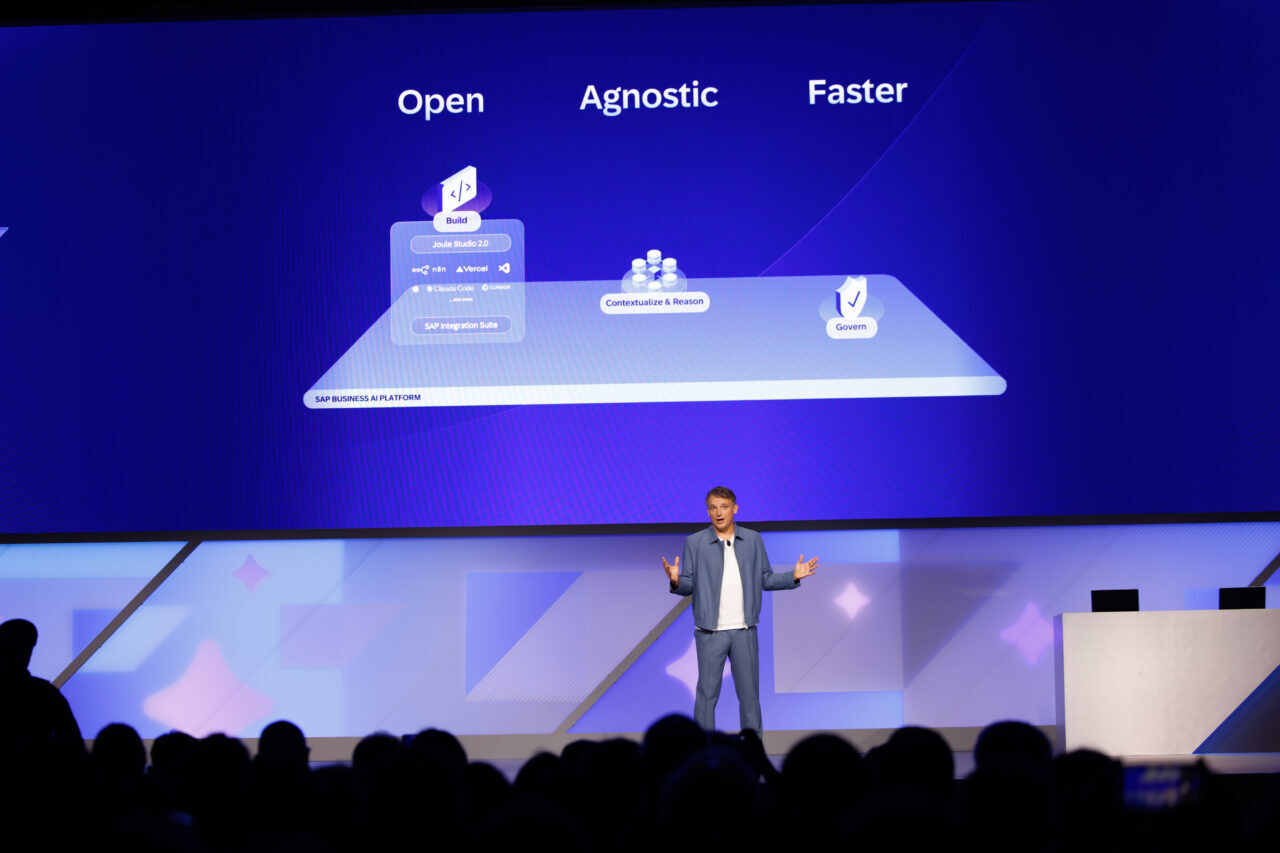

SAP Chief Executive Officer Christian Klein emphasized that modern corporate environments can no longer tolerate baseline margins of error in their digital tracking structures. The platform focuses on eliminating data fragmentation by delivering absolute governance over sensitive corporate parameters.
“For our customers’ critical business processes, being ‘nearly right’ is simply no longer enough,” SAP CEO Christian Klein declared during his keynote address. “By combining the SAP Business AI Platform with our SAP Autonomous Suite, we are deeply embedding autonomous AI agents directly into corporate processes, data structures, and governance layers. These specialized agents deliver precise, legally compliant, and highly secure outcomes, unlocking new revenue streams and generating monumental cost savings.”
Architecting the Autonomous Foundation
The architectural backbone of this new enterprise era merges three foundational layers into a single, centrally managed operational environment: the SAP Business Technology Platform, the SAP Business Data Cloud, and SAP Enterprise AI solutions. At the core of this system lies the newly developed “SAP Knowledge Graph,” a dynamic digital twin that provides autonomous agents with a highly structured, semantic map of an organization’s specific business assets, cross-departmental relationships, and historical processing logics.
To streamline development, SAP introduced Joule Studio, an advanced orchestration environment where internal and external developers can design, test, and scale corporate agents and agentic workflows. Utilizing a combination of no-code, pro-code, and native AI frameworks, developers can build scalable applications atop a secure, SAP-managed cloud infrastructure optimized specifically for enterprise workloads.
Deploying the SAP Autonomous Suite
Building directly upon this cognitive foundation, SAP launched the SAP Autonomous Suite, an application layer designed to inject automated agents into existing business systems. The suite is slated to roll out over 50 process-driven Joule Assistants across key corporate branches, including finance, procurement, human resources, supply chain management, and customer experience. These assistants act as digital orchestrators, managing an underlying matrix of over 200 highly specialized micro-agents to automate multi-step, end-to-end procedures.
A prime example of this technology in action is the new Autonomous Closing Assistant. Engineered for corporate accounting departments, this agent completely automates ledger evaluations, currency reconciliations, and transactional error troubleshooting, shrinking the traditional multi-week financial closing cycle down to just a few business days.
Furthermore, SAP expanded its vertical portfolio through Industry AI, a specialized suite featuring seven autonomous, sector-specific solutions that integrate local regulatory requirements, distinct data models, and vertical process logic. During the Sapphire events, SAP demonstrated this capability via its ongoing collaboration with European energy giant RWE. Utilizing SAP’s Autonomous Asset Management protocols, AI agents successfully analyzed historical operational data from offshore wind turbines to isolate potential root causes of unexpected downtime, automatically generating pre-populated maintenance work orders containing precise tool lists and proven repair methodologies.
Redefining the User Interface with Joule Work
The technological shift also introduces Joule Work, an interaction environment that fundamentally redefines how corporate employees engage with enterprise resource planning (ERP) software. Instead of manually navigating fragmented applications or entering data across multiple siloed screens, users interact directly with Joule using natural language or voice commands. By describing a desired business objective, the user triggers Joule to automatically coordinate the optimal combination of workflows, corporate datasets, and digital agents to execute the task behind the scenes.
Joule Work operates far beyond the capabilities of standard conversational chatbots; it proactively surfaces context-aware business insights and automates routine operational tasks in the background, ensuring corporate workflows progress continuously even when human operators are offline. The autonomous user experience is fully responsive, supporting desktop, mobile, and voice modalities across both native SAP environments and third-party legacy systems.
Accelerating Cloud Migration and Partner Ecosystems
To fast-track the global adoption of the Autonomous Enterprise model, SAP announced a dedicated €100 million ecosystem fund earmarked for its global partner network. This capital injection is designed to support software partners who utilize Joule Studio to expand their existing digital agents or engineer brand-new agentic systems directly on the SAP Business AI Platform.
Additionally, SAP expanded its RISE with SAP and SAP GROW transformation programs to lower the barrier to entry for cloud migration. RISE with SAP customers will gain active access to three specialized Joule Assistants within their first year of deployment, while SAP GROW subscribers will receive unrestricted access to the entire assistant portfolio immediately upon onboarding. This integration strategy extends to legacy SAP S/4HANA on-premise and SAP ERP Central Component (SAP ECC) customers. Legacy users who commit to migrating their core architectures to SAP Cloud ERP will receive immediate bridge access to select AI frameworks, effectively closing the technological gap between localized infrastructure and cloud targets.
To further de-risk the transition, SAP introduced agent-supported migration tools that automate system analysis, custom code remediation, system configuration, and continuous testing cycles. According to internal benchmark data, these AI-driven transformation assets reduce the overall time, cost, and complexity of traditional cloud ERP migration projects by more than 35 percent.
Deepening Elite Tech Partnerships
The rollout of the platform is supported by an extensive network of deepened technical alliances designed to maximize interoperability and infrastructure safety:
- Anthropic: Integrates advanced Claude foundational models to power Joule agents across human resources, procurement, and supply chain logistics.
- Amazon Web Services (AWS): Implements zero-copy data integration between the SAP Business Data Cloud and Amazon Athena, allowing real-time query executions without moving underlying data.
- Google Cloud & Microsoft: Facilitates secure, bidirectional agent-to-agent interoperability, linking Joule seamlessly with external enterprise agent frameworks.
- NVIDIA: Delivers high-performance computing frameworks to guarantee a trusted, accelerated, and secure runtime environment for Joule Studio operations.
- Mistral AI & Cohere: Expands the platform’s linguistic and geographic versatility by providing native, sovereign large language model options directly within SAP’s cloud security perimeter.
- Palantir & Parloa: Integrates highly specialized customer interaction agents with the SAP Service Cloud, granting digital assistants full operational access to back-end transaction data.
- n8n & OpenShell: Powers the visual workflow orchestration layers and secure runtime controls embedded within the foundational developer tools.
As enterprises globally look to navigate mounting macro-economic volatility, supply chain disruptions, and complex regulatory environments, SAP’s aggressive pivot toward agentic automation establishes a new operational baseline. By transforming static software into a self-managing, intelligent network, the SAP Business AI Platform paves the way for a highly efficient corporate era where digital systems actively solve problems before they impact the bottom line.