


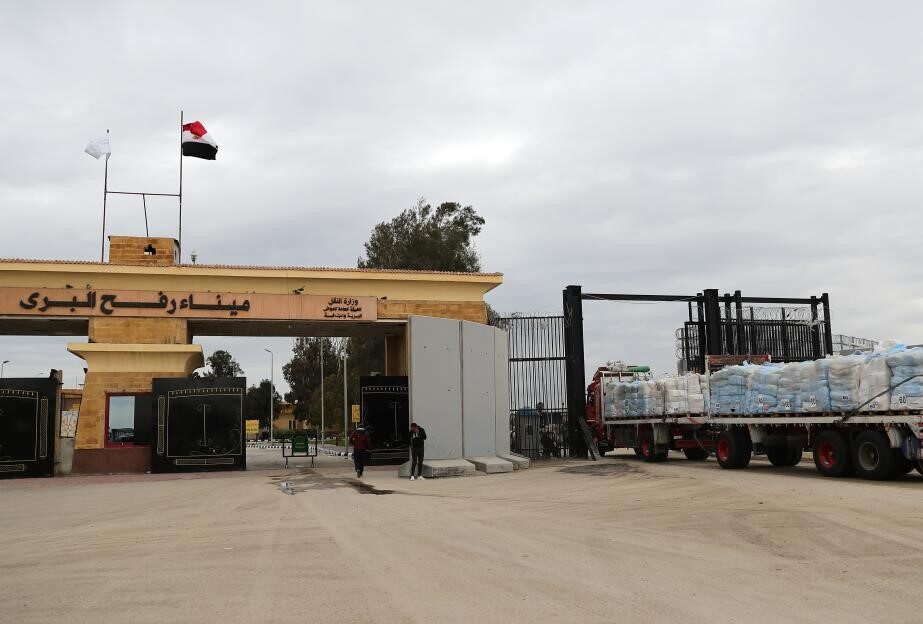
Israel enacts an indefinite closure of all Gaza border crossings, including Kerem Shalom and Rafah, following a massive Iranian ballistic missile attack.
Israel has ordered the immediate and indefinite closure of all border crossings into the Gaza Strip following a major ballistic missile assault from Iran. The emergency security directive targets critical transport routes, including the Kerem Shalom and Rafah transit points. Defense officials confirmed the lockdown is part of a broader network of protective measures deployed to secure borders during the ongoing regional flare-up.
Israel has enacted a total, indefinite lockdown of all land border crossings connecting to the Gaza Strip, severely severing regional supply lines. The rapid operational shutdown was triggered directly by a massive barrage of Iranian ballistic missiles fired toward Israeli territories earlier in the evening, pushing state military organizations into emergency defensive postures.
The sweeping closure halts all movement through key geopolitical transit points, including the northern commerce corridors, the eastern shipping hubs, and southern international terminals. Security authorities have stated that the border gates will remain completely sealed until a comprehensive reassessment of the active threat landscape is finalized by senior defense commanders.
COGAT Activates Emergency Protocols
According to reports published by Israeli media networks, the Coordinator of Government Activities in the Territories (COGAT)—a specialized operational unit operating under the jurisdiction of the Israeli Ministry of Defense—confirmed the implementation of the strict border measures.
COGAT officials announced that the security apparatus had mobilized a pre-programmed tier of protective actions to insulate localized borders from potential cross-border volatility or exploitation during the wider regional confrontation.
“In immediate response to the hostile ballistic missile deployment from Iranian territory, COGAT has activated a series of mandatory national security protocols,” the official defense statement clarified. “Effective immediately, all access corridors into the Gaza Strip, including the Kerem Shalom cargo terminal and the Rafah cross-border facility, are closed to all traffic until further notice.”
The immediate freezing of border access has suspended the flow of incoming goods, diplomatic transit, and commercial aid convoys, locking down the enclave’s perimeter as state air defense grids remain on high alert.
Border Chokepoints Sealed Indefinitely
The decision to isolate the Gaza frontier forms a primary segment of Israel’s synchronized defensive reaction to the multi-front escalation. By sealing off the primary chokepoint at Kerem Shalom—which serves as the central artery for verified industrial supplies and logistics—alongside the strategic Rafah crossing on the southern border, defense planners aim to lock down internal movement while military commands focus resources on countering long-range aerial threats.
International security analysts observe that during major long-range missile exchanges, safeguarding border checkpoints is prioritized to prevent localized security breaches, coordinate logistical control, and protect personnel stationed at open transit stations from falling debris or secondary impacts.
With no clear timeline outlined by COGAT for the resumption of cross-border operations, the ongoing frontier freeze is expected to exert immediate pressure on regional logistics while emphasizing how rapidly long-range state warfare can paralyze foundational transit architectures on the ground.