


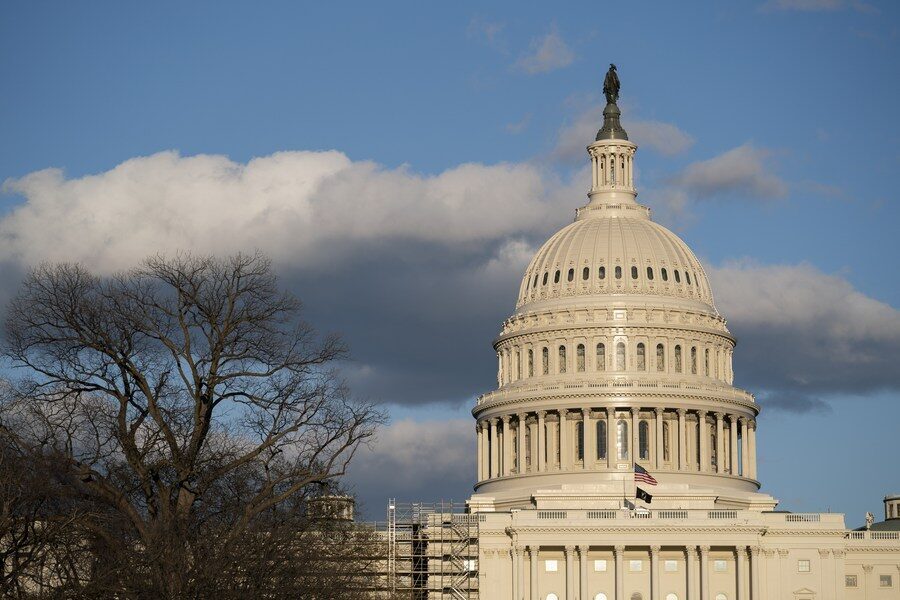
The United States Senate has narrowly approved a milestone procedural motion on a war powers resolution that would strip President Donald Trump of unilateral authority to extend military operations against Iran without explicit legislative consent.
SENATE IMPOSES HISTORIC LEGISLATIVE BRAKE ON TRUMP’S WAR STRATEGY
WASHINGTON — In a significant legislative developments on Capitol Hill, the United States Senate has successfully advanced a War Powers Resolution targeting President Donald Trump’s ongoing military engagement in Iran. Introduced by Democratic Senator Tim Kaine, the resolution was brought to the floor via a tight 50-47 vote, marking the first time the upper chamber has broken through procedural barriers after seven prior failed attempts. The historic shift materialized when four Republican senators—Rand Paul, Susan Collins, Lisa Murkowski, and Bill Cassidy—broke party ranks to join the Democratic majority, citing growing concerns that the administration’s “Operation Epic Fury” has left Congress entirely uninformed regarding its long-term strategic endpoints.
The vote directly challenges the White House’s legal assertion that a recent temporary ceasefire effectively reset the 60-day deadline mandated by the 1973 War Powers Act. Opponents of the conflict maintain that without an explicit declaration of war or specific Authorization for Use of Military Force (AUMF), continued naval blockades near the strategic Strait of Hormuz remain constitutionally unauthorized.
IRANIAN FOREIGN MINISTER ISSUES WARNING OVER DESTRUCTIVE F-35 STRIKE
Responding immediately to the escalating political friction in Washington, Iranian Foreign Minister Abbas Araghchi issued a sharp warning on social media, asserting that any attempt by the Pentagon to resume active hostilities would trigger unprecedented military consequences. Citing recent data discussed within U.S. congressional circles regarding multi-billion-dollar losses across American aerial fleets, Araghchi claimed that Tehran’s defensive capabilities have already successfully dismantled Western air superiority.
“Our powerful Armed Forces are confirmed as the first to strike down a touted F-35,” Araghchi declared, warning that the lessons and intelligence gathered by Iranian forces over the initial 40 days of intense engagement would ensure that a return to active warfare would feature far more devastating tactical surprises for Washington.
WHITE HOUSE SECURES REGIONAL BACKING AND ASSURES RAPID RESOLUTION
Conversely, speaking to legislators during a formal reception on the White House grounds, President Donald Trump presented a highly confident assessment of the conflict, indicating that military operations have drastically degraded Tehran’s conventional defense systems. Trump revealed that a scheduled large-scale assault was temporarily put on hold following direct intervention and mediation requests from prominent Gulf leaders, including the Emir of Qatar, the Crown Prince of Saudi Arabia, and the President of the United Arab Emirates, while diplomatic channels attempt to draft a permanent peace treaty.
Asserting that U.S. forces have successfully neutralized significant portions of Iran’s naval infrastructure, missile defense arrays, and primary command hierarchies, Trump declared that the conflict would reach a definitive conclusion in a very short timeframe. However, the U.S. President maintained an unyielding stance regarding international security boundaries, reinforcing that any final diplomatic resolution must guarantee an absolute baseline: “Iran will under no circumstances be allowed to develop or possess a nuclear weapon.”